
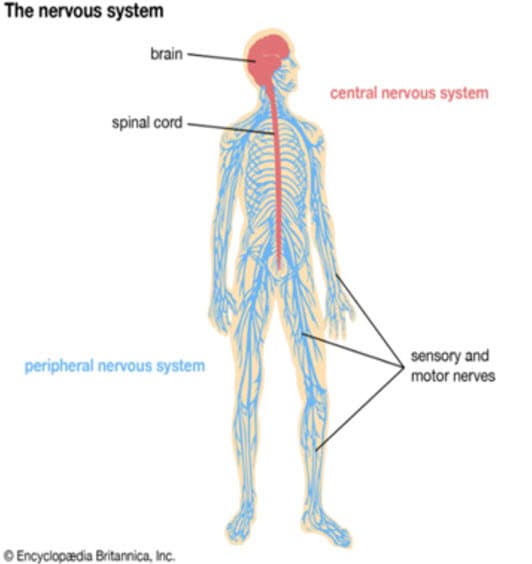
- The Nervous system consists of a Central Nervous System (CNS) and an Autonomic Nervous System (ANS).
- The Central Nervous system includes the brain and spinal cord. The brain and spinal cord control the body’s communication, regulation, coordination and sensory assessment functions.
- At the base of the skull atop the axis of the spine, lies the medulla area of the brain.
- Some of the many functions of the medulla include: affecting blood pressure, heart rate, metabolic rate, glandular secretions, mineral utilization, oxygen supply and water retention.
- The Autonomic nervous system controls the involuntary functions of the body. The ANS is controlled by neurotransmitters signaled by the adrenal glands.
- There are 2 ANS branches, the Sympathetic Nervous system and the Parasympathetic Nervous system.
- The Sympathetic Nervous system takes over during stressful situations also referred to as “fight or flight.”
- The Parasympathetic Nervous system takes over during non-stressful situations for example, slows down a fast heart rate.